
Facing False Arrest
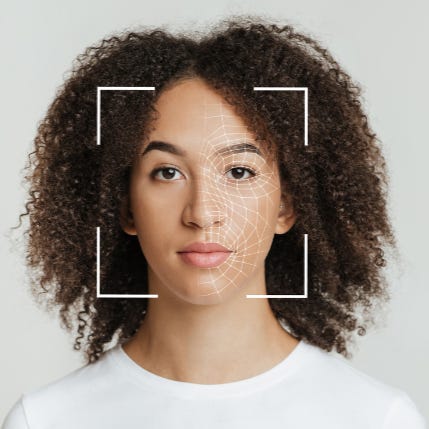
Biometric security features can be very convenient for consumers. There are a lot of advantages to fingerprint scanning, retina readers, and now vascular systems. They are more secure and easier to use than passwords, which are being phased out by many applications. Users of recently purchased mobile phones are familiar with facial recognition sign-on systems and use them every day.
Yet as popular as facial recognition has become for personal password replacement, consumers feel less secure about trusting others to use their features safely.
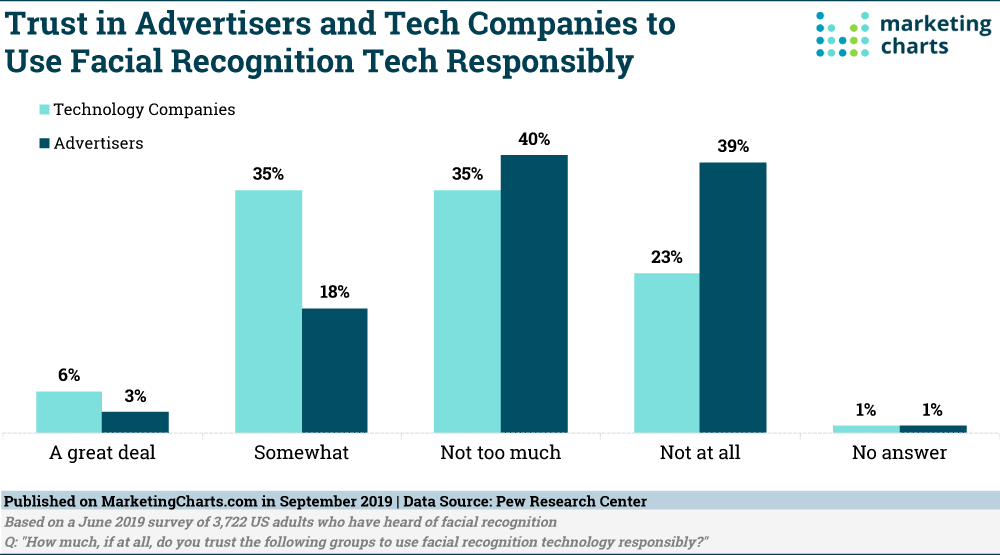
It turns out that lack of trust in the use of facial recognition software is well-founded. This software can be employed anywhere there is a camera, including in public areas. Unlike your mobile phone apps, no one is going to ask your permission to record your image and feed it into an AI database to determine who you are, and what you are doing.
The world leader in this technology is China. While their government recently issued rules to limit use for business applications, no such limits exist for the government itself. For years, the Chinese authorities have developed the ability for a camera and software to recognize ethnic groups that they wish to monitor. Facial recognition is so ubiquitous in China that protesters in Hong Kong wore face masks to “trick” Chinese surveillance. This led to a ban on face masks in Hong Kong.
In the United States, police departments around the country have enthusiastically embraced the use of facial recognition. As long ago as 2016, 1 in 4 police departments were using these systems. While FR is considered highly accurate, like all technology, it is not perfect. In fact, facial recognition lacked accuracy when used on (surprise!) black faces. In particular, black female faces resulted in a higher error rate for FR.
The reasons for this failure in recognition, some say, can be attributed to the engineers writing the FR software programs, since they are overwhelmingly white males. Whatever the reason, the software just doesn’t work well if you are black and female.
No one knows this better than Porcha Woodruff. Last February Detroit police showed up at her home to arrest her for robbery and hijacking. Porcha was incredulous. “Are you kidding?” she asked. The police told her to step outside of the home so they could demonstrate if they were joking or not. There, in front of her two crying children, aged 6 and 12, they handcuffed her and hauled her off to the Detroit Detention Center.
Porcha Woodruff is a licensed aesthetician and nursing school student. She was also eight months pregnant at the time. Before being taken away, she was able to tell her kids to wake up her fiancé because, “Mommy’s going to jail.”
This pregnant woman, illegally arrested, was forced to remain on a concrete bench for 11 hours and eventually had to post a $100k bond. When released, she went to a hospital suffering from “stomach tightness and pain, whole body pains, headaches, and body weakness,” and was “diagnosed with low heart rate due to dehydration and was told she was having stress-induced contractions.”
Of course, this pregnant woman was not a car hijacker. The software erred when an 8- year-old photo of Woodruff was used as a referent, which wound up being mistakenly confirmed by the robbery victim. Now Woodruff has filed a lawsuit, charging the city and a detective with a series of violations including false arrest, imprisonment, and violation of the constitution’s 4th amendment, protecting citizens from unreasonable seizures.
Her lawsuit joins at least two others who have been arrested in Detroit using the same facial recognition technology. The lawsuit says, in part, “Facial recognition technology has long been known for its inherent flaws and unreliability, particularly when attempting to identify black individuals such as Porcha Woodruff”.
Like all biometric software, FR is essentially dumb. Like any AI system, it correlates information, sometimes vast amounts of it, and like the software in Minority Report, it makes mistakes. Being able to correlate vast amounts of data quickly does not make it smart. Conversely, being dumb, it is unable to reach a dependable conclusion.
Like any software, FR also needs to be used by humans who are not dumb. Unfortunately, the Detroit Police did not pass this particular intelligence test. Adding their own dumb decisions on top of a dumb FR result led to a black pregnant mother being arrested in from of her children violating her rights in multiple ways.
Some states have tried to reign in the use of facial recognition by law enforcement. In March 2020, Washington state was the first to try to regulate use of facial recognition software by state and local government agencies with the passage of SB 6280. Microsoft lobbied for it’s passage and hailed it as “landmark” legislation. But with exemptions for licensing departments and partnerships with federal agencies, and lack of enforcement and accountability measures, SB 6280 ended up fairly toothless. Even with stronger enforcement measures, a bill like SB 6280 would have had little effect in the case of Porcha Woodruff’s case, as she was not surveilled, but rather “facial recognition software mistakenly matched an eight-year-old photo of her — taken when she was detained for driving with an expired license — with video footage of a suspect.” So, FR used a picture of her police already had on file to falsely identify her.
This increasingly complicated world of AI and facial recognition is not something to be solved by creating new laws. Technology will always advance much faster than congress could possibly hope to act. Law enforcement will always find new and innovative ways to use the technology. The Fourth Amendment prohibiting unlawful arrest has been in place since 1789. If the detective, police, or judge had used common sense this terrible situation would not have happened.
This is a recognition problem. Not facial recognition, but the recognition that software alone cannot indict a criminal, only people can. And law enforcement people should know that as good as facial recognition is, FR is imperfect, especially with black females. No one should be taken into custody based on this technology alone.
If anyone – politicians, law enforcers, judges, begin to believe that biometric software is infallible, and that people should be judged criminals based on what some software indicates, then we have failed to use technology properly. Not only will we need to create new laws protecting our biometric rights, but we will also need to ensure that government agencies adhere to the existing laws that are designed to protect us when their agents act dumb.
 | A guest post by
|
Check out the AJL
https://www.ajl.org/
Algorithmic Justice League
There's good reason that lie detectors are not admissable for evidence. Even photo evidence is highly suspect anymore.