
Immigration 101
We Need Population
At this point, none of us need convincing that our government’s spending is out of control, and that we are heading headlong into an economically unmanageable state of affairs. The costs of maintaining Social Security, Medicare, and other social programs, along with mounting debt and interest payments are fast exceeding our ability to pay for them.
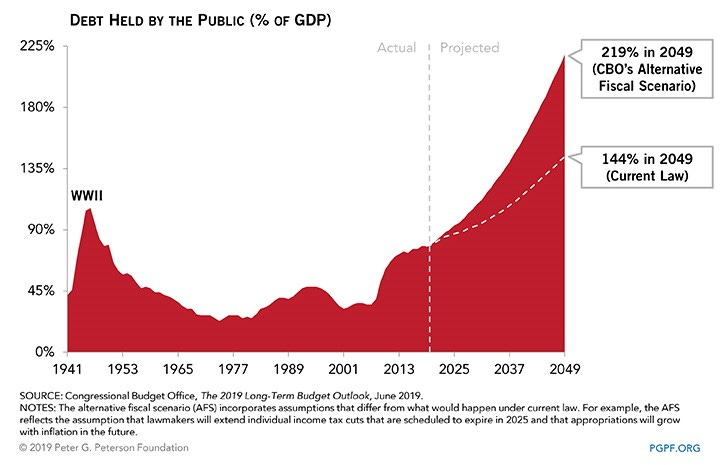
Spending less is, at present, only a theoretical option. The most often cited reason is that social programs make up the bulk of federal spending, and this 70% chunk cannot, by law, be reduced. In fact, the built-in spending increases may not be touched under current budget law. Congress, however, could change these laws and reduce spending through various means. Neither major party’s representatives have any serious motivation to make these changes, though, as their career and pension concerns far outweigh the financial health of the American public.
The social security account deficit can automatically drastically reduce payments to retirees when the money dries up, as we have noted in a previous post. The chances of this happening are roughly on par with the chances of Vermin Supreme occupying the Oval Office.
The alternative to spending cuts is, of course, to increase tax revenue by having Americans pay more than they do now. A lot more.
Let’s think about this. We need more tax revenue, and Americans are already paying taxes that are too high. The various plans of our more Socialist-minded representatives to soak the wealthy will generate nothing like what is needed to fund the programs that they claim are untouchable.
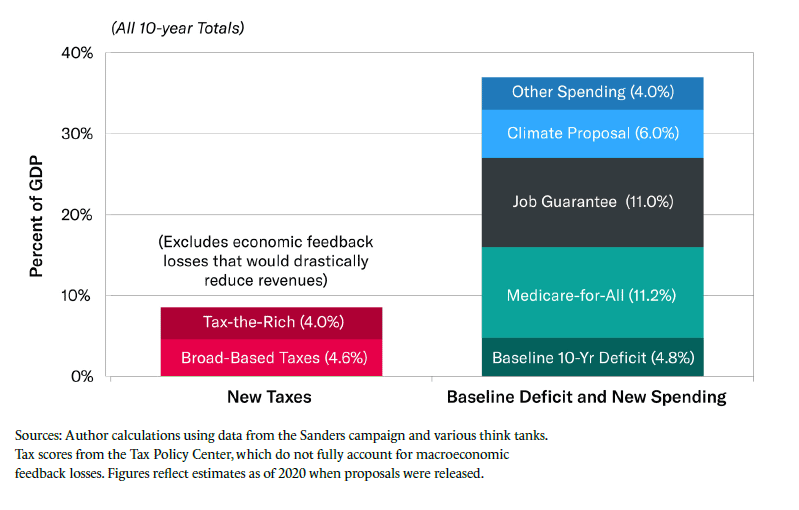
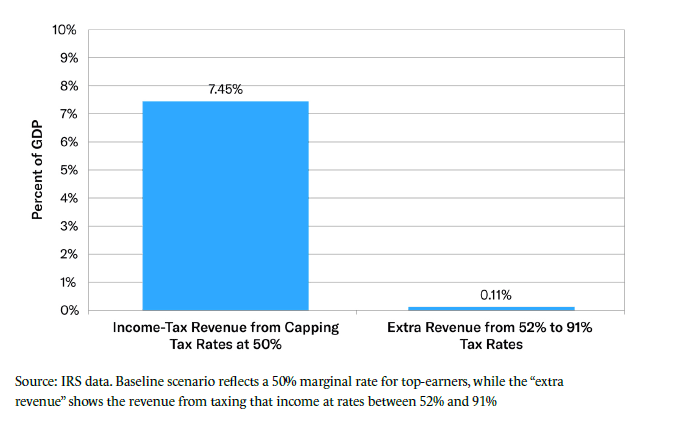
So where can we get this revenue?
The only way to collect more taxes without raising tax rates is by having more taxpayers.
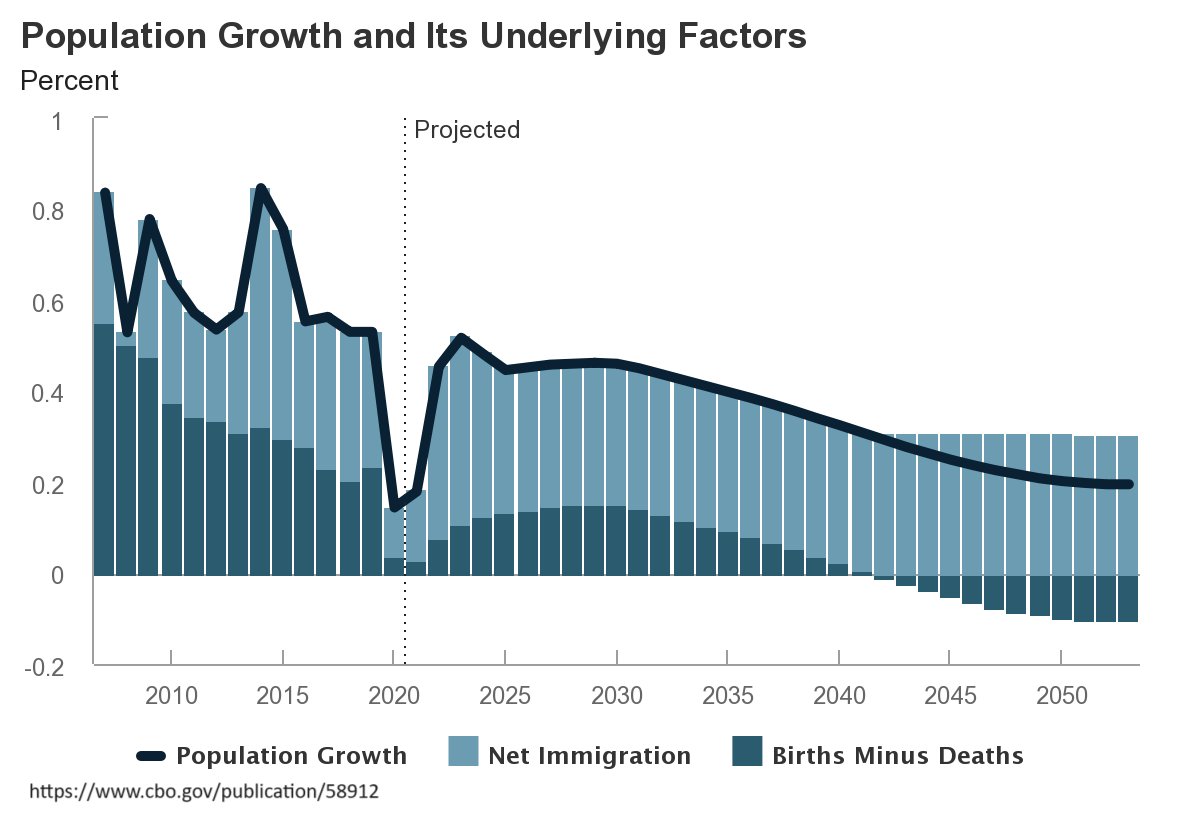
Since America was first established, this was never a concern, as our population has grown steadily over the centuries. But the Census Bureau projections recently released a report that shows, under the most likely scenario, the U.S. will stop growing by 2080 and shrink slightly by 2100. It is the first time that the bureau has projected a population decline as part of its main outlook for the coming decades. The only time the U.S. has recorded a population decline was in 1918, when the flu pandemic and deployment abroad of more than one million troops produced a small drop in the estimated population.
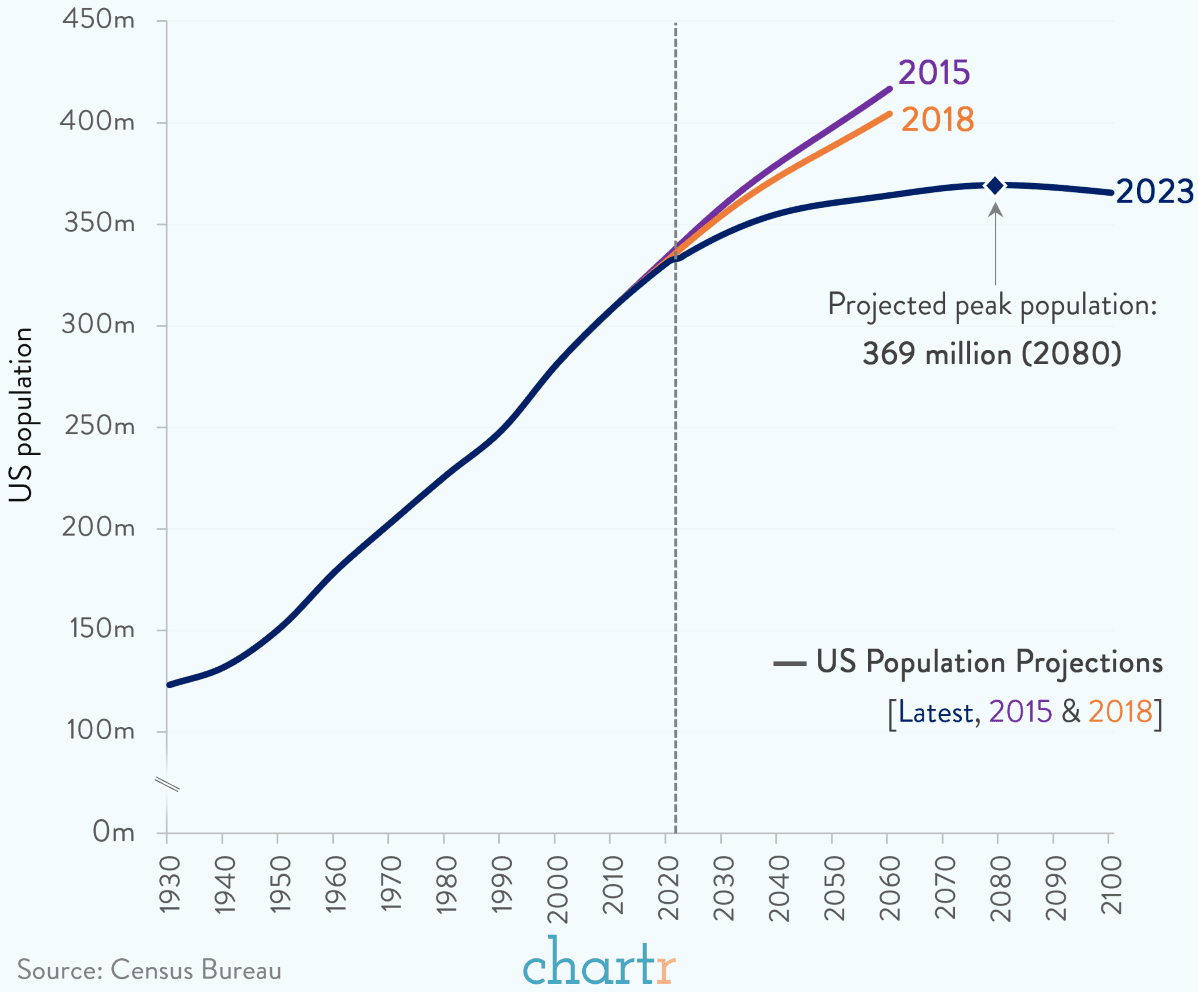
Slowing growth would produce a peak U.S. population of almost 370 million before an ebb to 366 million in the final years of the century, according to the bureau. The projections—the first issued since 2018—reflect years of declining birthrates, higher death rates because of an aging population, and increased reliance on immigration for population growth. In 2022, preliminary data showed the U.S. birthrate was about 19% lower than in 2007. Death rates remain about 9% higher than 2019, the last year before the pandemic. By 2038, deaths would exceed births under the most likely scenario. This poses a rather serious problem.
The projections anticipate that the aging of the population will accelerate with historically low birthrates and movement of the large millennial generation into old age. Rising life expectancy —from 79.8 now to 87.8 by 2100—would also contribute to the aging trend.
The prime working-age population—ages 25 to 54—would begin to shrink by the mid-2040s as millennials age out of that bracket. Economists and demographers track this group because its members have high rates of employment and pay, the source of payroll taxes that fund much of Social Security and Medicare. In its own projection this year, the Congressional Budget Office estimated that this group would grow 0.2% a year, a quarter of its growth rate since the mid-1980s.
Much of the world is experiencing the same projected declines in population, most notable in China and Europe. A few weeks ago, Elon Musk spoke at a Rome conference about Italy’s plummeting fertility rates. On stage, he suggested a simple solution, “Make more Italians.”
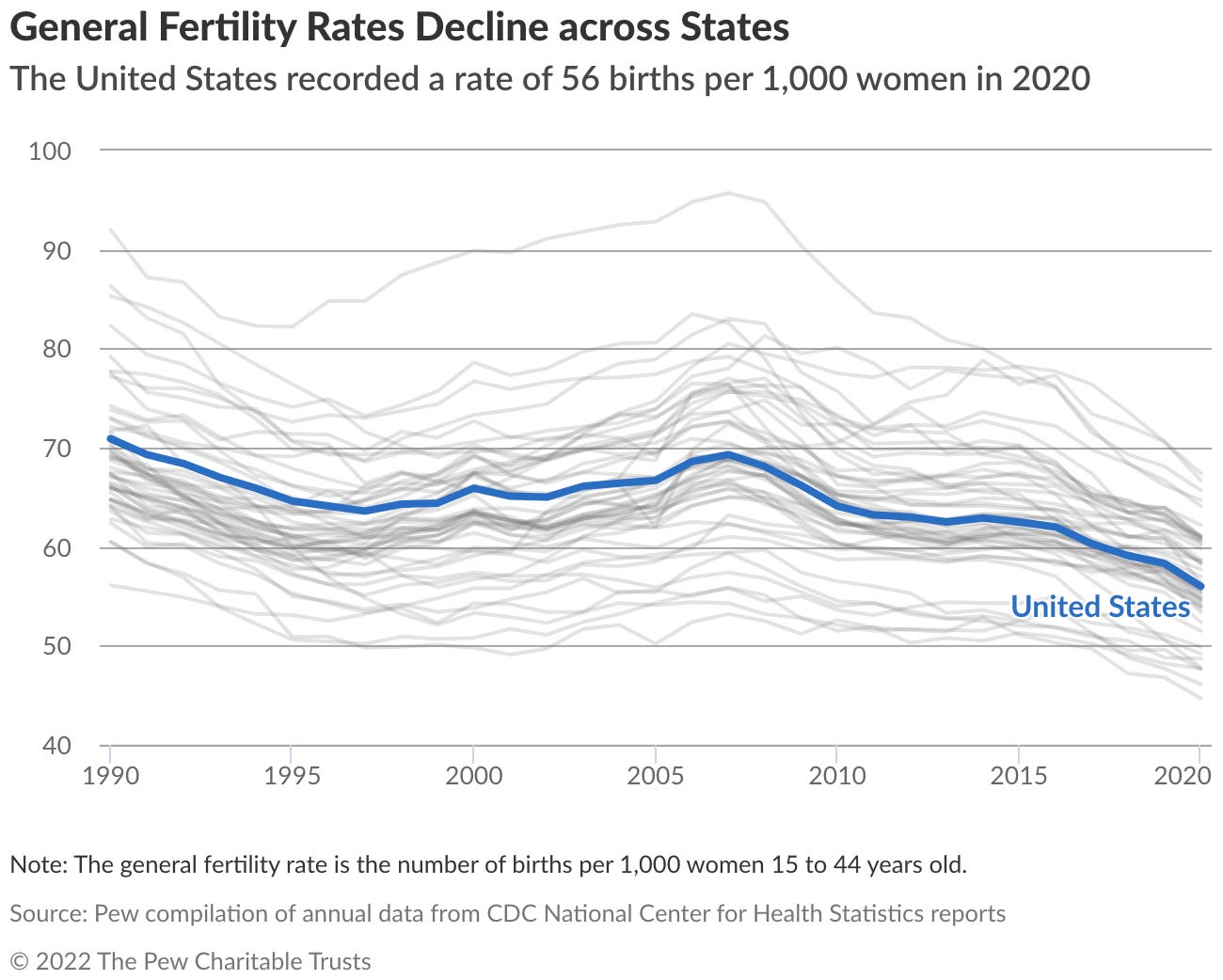
If we apply the same suggestion to ourselves, we would simply “Make More Americans.” The problem there, is that since 2022 our birth rate has flattened, with a trend of decreasing fertility rates in the U.S. So, no chance of lots of new Taxpayers at the birthing clinic.
That leaves us with the only other avenue for ‘Making more Americans’. And that way is called ‘immigration’.
We need to look at immigration now, because a lack of human resources means more than just paying for our generous social programs. It is because America is losing the ability to create growth. While the bloated Tech sector has undergone a spate of layoffs, we lack workers in major industries, Without enough employees, industries cannot grow.
Healthcare: The National Council of State Boards of Nursing (NCSBN) reported that 100,000 registered nurses left the field between 2021 and 2023. And by 2027 610,000 more plan to exit their jobs, with stress and lack of support being major reasons.
Computer Chips: The much-touted Chips and Science Act costing $52 billion has stalled. We have plenty of money, but not enough skilled workers.
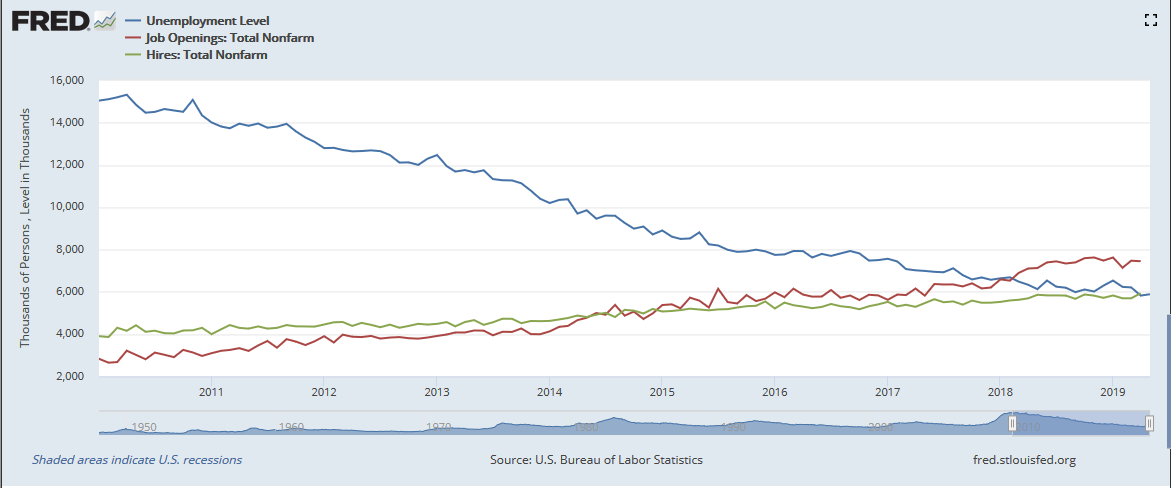


Construction and manufacturing are in the same boat. Farmers in Florida say that anti-immigration laws have cost them up to half of their field staffs. Mushroom growers in Pennsylvania have halved their varieties of output due to lack of workers. All over the nation, employers cannot find dishwashers, cleaners and cooks. In order to fill thousands of job openings, Topeka Kansas has spent $50k to attract Spanish speakers in a campaign called, “Choose Topeka”. The WSJ reported that daily pay for migrant construction workers went from $120 to $200 day – a 60% increase, in the Washington, DC area.
Getting an H-1B visa for highly educated foreign professionals has become nearly impossible. Canada, sensing an opportunity to scoop up this talent, is targeting these professionals, and had developed programs to pre-empt the US. A Toronto immigration lawyer, Sergio Karas, commented, “If I were the US government, I would be very upset that Canada is basically siphoning off American workers.”
A 2022 paper from the National Bureau of Economic Research found that 26% of business innovation (patents, inventions) are produced by immigrants. The Congressional Budget Office now attributes an extra $7 Trillion Dollars in economic growth over the next decade to an influx of immigrants.
Contrary to the popular reporting of the media, this same report shows that immigration to the United States is not primary driven by political asylum or fear of violence in home countries. People are attracted to America because of the vast financial opportunities offered. By working here, these people and their families become richer, while making our country wealthier.
Clearly, increasing legal immigration benefits all of us. So why has this topic become demonized in our political conversation? For decades, Democrats objected to migrants because this was the position of their Union base. The GOP, being friendlier to economic growth, promoted immigration. Today, both the Democrats and GOP, and even lower tier parties, are promoting immigration as an existential threat to our country.
What America needs is more immigration. A lot more. But what is holding us back from protecting our economy and well-being? What are the possible solutions to our financial and cultural decline, and why has our collective attitude changed so drastically?
More in our next Substack.
Reform Congress is a collaboration between Liz Terwilliger and Stephen Wahrhaftig.